Global Crime Syndicates Cast a Dark Shadow Over Myanmar’s Sacred Mount Mulayit
At the foothills of Mount Mulayit, one of Karen State’s most iconic natural landmarks, an insidious darkness is spreading.
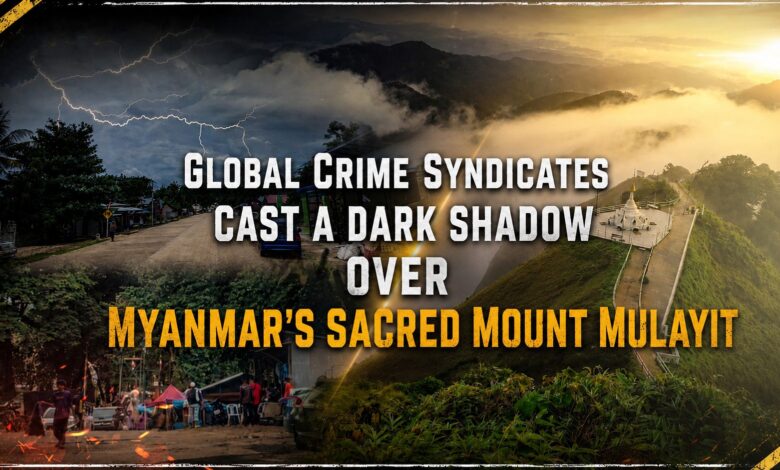
It is not the seasonal mist that traditionally drifts across its peaks, but the creeping expansion of global criminal networks that have quietly taken root in the jungle below.
Rising more than 6,000 feet above sea level in the eastern Dawna Range, Mount Mulayit has long drawn pilgrims and tourists across Myanmar and abroad, lured by its lush green slopes, cool mountain air, and tranquil atmosphere.
In times of peace, the area holds immense potential as a premier eco-tourism destination.
However, since 2025, a darker force has infiltrated these peaceful foothills: illegal cross-border telecom scam operations, known locally as zhapian syndicates.
Their arrival is transforming this sacred sanctuary into a new frontier for organized crime.
Driven into the Jungle: The Evolving Threat
Previously, zhapian syndicates in Karen State operated in plain sight—running sprawling, casino-style compounds with neon lights near border towns like Myawaddy and Shwe Kokko, adjacent to Thailand.
Following international pressure and countermeasures by the Thai government—including targeted cuts to electricity and internet supplies—these criminal networks have retreated into remote, mountainous terrain to establish hidden bases.
Local sources report that at least three scam compounds now operate around the foothills of Mount Mulayit.
Another three have been established near Warmeehta Village, close to the headquarters of the Democratic Karen Benevolent Army (DKBA), an ethnic armed group currently maintaining a ceasefire with Myanmar’s military junta.
Crucially, these newly established compounds are no longer permanent concrete structures.
To evade law enforcement and adapt to ongoing armed conflicts, operators now utilize mobile, easily dismantled facilities.
Air-conditioned shipping containers and temporary tents serve as operational hubs, allowing syndicates to quickly vanish and relocate if authorities or rival armed groups draw near.
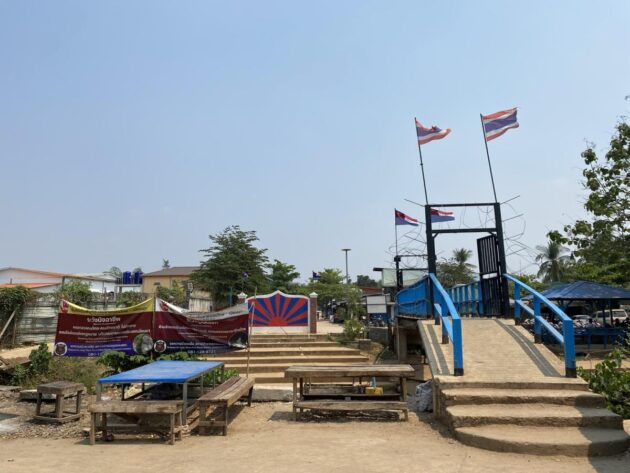
A Shadow Economy Fuelled by Local Backers:
Despite operating deep inside the Dawna mountains beyond mobile network range, eyewitness accounts and physical evidence confirm the compounds’ presence.
The sites feature high-security perimeters enclosed by metal sheet fencing and are guarded by personnel in black uniforms bearing Chinese-character armbands. The frequent movement of Chinese nationals in and out of these remote areas further underscores the scale of these operations.
In nearby villages, an unnatural economic boom has emerged. Restaurants, clothing shops, pharmacies, and beauty salons have sprouted up—not to serve residents, but to cater directly to Chinese telecom scammers. Local sources note that several beauty salons operate as fronts for prostitution networks linked to the compounds.
Sustaining operations in such remote areas requires powerful protection. The DKBA reportedly serves as the primary sponsor for these illegal activities, with senior officers profiting by leasing land and shielding the syndicates from interference.
Logistics heavily rely on cross-border supply lines from Thailand. Construction supplies and heavy machinery ordered from hardware stores in Mae Sot, Thailand, are routinely transported into Myanmar aboard large, Thai-registered vehicles.
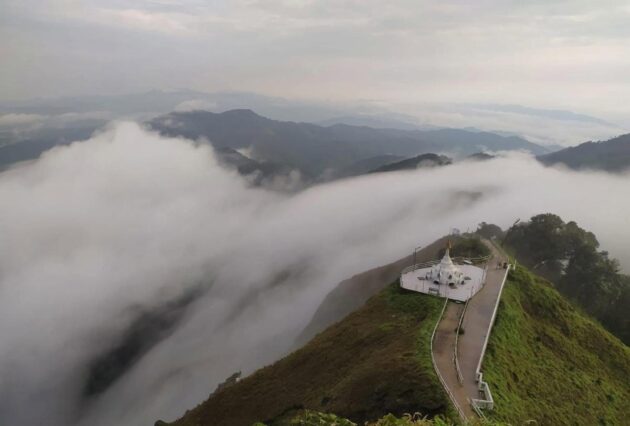
Satellite Lifelines and Human Cost
To overcome the lack of local telecom infrastructure, operators rely on Starlink satellite internet dishes, smuggled across border points near Myawaddy, to connect their fraudulent networks to the global internet.
To maintain 24/7 operations, compounds store tens of thousands of gallons of fuel to power commercial generators, supplemented by large-scale solar power systems.
Fuel supplies are continuously purchased and transported from both sides of the Thai-Myanmar border.
This unchecked expansion has brought a surge in serious crimes, including cross-border human trafficking, forced labor, and physical abuse.
According to a June 2026 report by the Thailand-based Civil Society Network for Human Trafficking Victim Assistance (CSNHTV), more than 5,300 victims remain trapped in scam compounds along Myanmar’s borderlands.
Rising international scrutiny prompted symbolic raids by Myanmar’s junta in 2025 on high-profile scam hubs such as Shwe Kokko and KK Park.
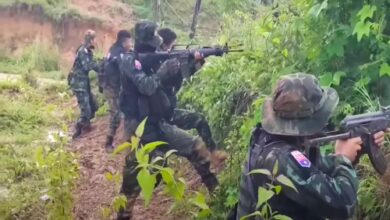
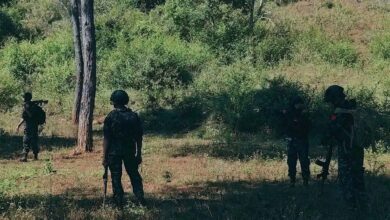
Similarly, the Karen National Liberation Army (KNLA)—the armed wing of the Karen National Union (KNU)—raided a DKBA-protected scam site near Hpalu and Minletpan.
However, these crackdowns largely resulted in syndicates relocating deeper into forested areas—moving from Shwe Kokko to Paingkyon Township, and from Minletpan to areas near Payathonzu and the DKBA headquarters at Sonseemyaing.
Once celebrated for its pristine tranquility, the eastern Dawna Range and the foothills of Mount Mulayit are now overshadowed by transnational crime and the complicity of local armed actors.
While Thai media report ongoing joint efforts between Bangkok and Beijing to target borderland scam syndicates, whether these measures will effectively disperse the dark fog hanging over Mount Mulayit remains to be seen.